

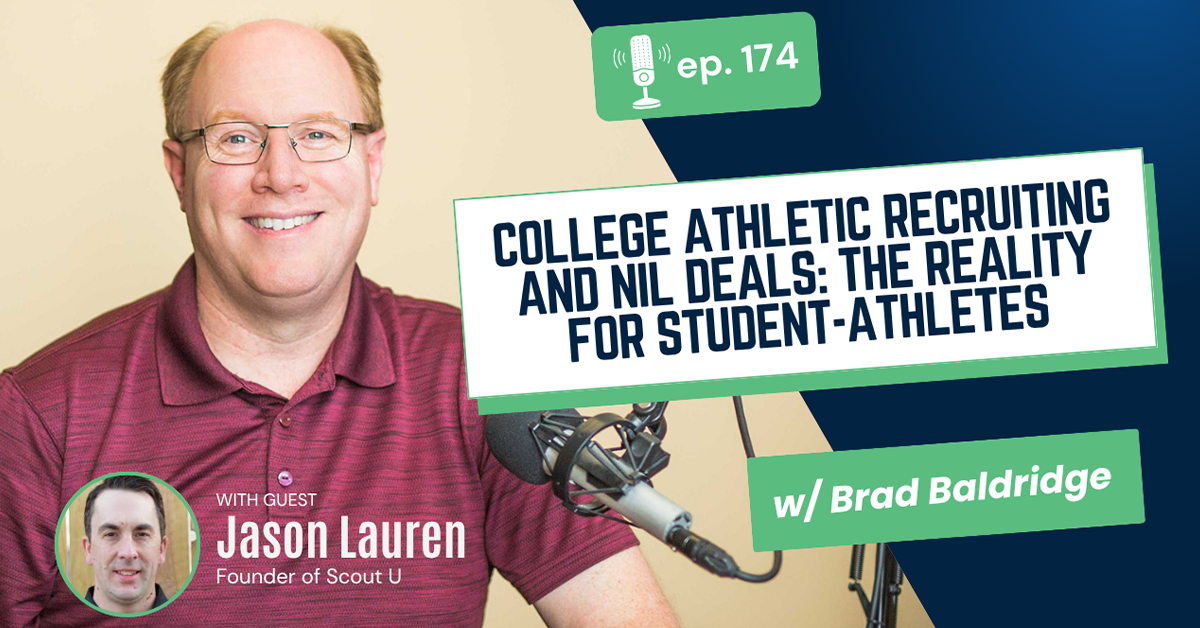
Today’s Guest:
Jason Lauren, Founder of Scout U
Jason Lauren is the founder of Scout U, a recruiting service that helps student‑athletes connect with college coaches and pursue opportunities to play at the next level. With nearly two decades of experience, Jason has guided athletes from middle school through college transfers, offering personalized support that goes beyond highlight reels and statistics.
At Scout U, Jason emphasizes credibility and personal guidance. His team only works with athletes who truly have college‑level potential, ensuring coaches know they’re seeing quality prospects. Jason also brings valuable insight into the evolving landscape of college sports, including the impact of NIL deals and the transfer portal, while keeping families focused on what matters most: exposure, realistic expectations, and balancing academics with athletics.
Questions Answered Today:
How does Scout U help athletes get recruited?
Jason explains that Scout U works with athletes from middle school through college transfers to connect them with coaches and guide them through the recruiting process. Services include highlight videos, personal websites, and direct outreach. What sets Scout U apart is its personal touch—families get a recruiting coordinator who answers questions and provides ongoing advice.
Unlike “sign-up services” where anyone can join, Scout U only works with athletes who have genuine college-level potential. This reputation reassures coaches that, when Scout U sends a prospect, they’re worth considering.
What is NIL and how has it changed college sports?
NIL (Name, Image, Likeness) allows college athletes to earn money through endorsements, appearances, and even direct payments from schools. Jason notes that schools now have multimillion-dollar budgets (often around $22 million) to pay athletes, though most of that goes to football and men’s basketball.
While NIL has opened new opportunities, Jason points out that the system is still unsettled. Without binding contracts, athletes can switch schools after signing deals, sometimes before ever playing a game. Combined with the transfer portal, this has created frequent movement and uncertainty for both athletes and programs.
He argues that if athletes are being paid, just like in professional leagues, contracts should be required, to prevent constant movement and broken commitments.
Are NIL deals really worth millions, or is the reality different?
While headlines often highlight million‑dollar NIL contracts for star football or basketball players, Brad and Jason emphasize that this is not the norm. Brad cites NCAA clearinghouse data showing that most NIL deals fall into the $0–$100 or $100–$1,000 range, with only a small percentage exceeding $10,000. Jason agrees, noting that many athletes earn modest sums through local opportunities such as running camps, hosting clinics, or promoting small businesses on social media.
NIL has created new avenues for athletes to monetize their skills and visibility, but families should temper expectations. For most athletes, especially those in non‑revenue sports, NIL is more about supplemental income than life‑changing wealth. A softball player might earn a few hundred dollars running a youth camp, while a track athlete could partner with a local gym for small promotional deals. These opportunities can be valuable, but they don’t resemble the headline‑grabbing contracts seen in football or men’s basketball.
“It’s not where these kids are winning the lottery, so to speak. And like, ‘I’m going to go to college and make multi-millions of dollars.’ That’s going to be pretty tough.” – Jason Lauren
How do recruiting challenges differ between team and individual sports?
Brad and Jason compare recruiting in individual “time sports” (such as track or swimming) versus team sports (such as softball or basketball). In individual sports, measurable results such as times, distances, or heights make evaluation straightforward. Coaches can quickly see if an athlete meets their standards.
But, in team sports, stats such as batting average or points per game can be misleading. A softball player hitting .400 might have faced weak competition, or a basketball player who scored 25 points could be the only scorer on a poor team. Coaches need video evidence to truly assess skill.
Jason explains that smaller sports often have limited recruiting budgets, with some Division I softball coaches working part‑time jobs. These coaches rely heavily on athletes reaching out rather than traveling nationwide to scout.
“99% of athletes, when they get recruited by a school, there’s a pretty good chance that the kid reached out to the school, not the other way around in that initial contact. So, if you’re just sitting back thinking you’re really good… there’s a decent chance you’re going to get left behind.” – Jason Lauren
What should families prioritize when planning recruiting alongside academics?
Jason cautions against waiting until a student picks a college before contacting coaches. By then, recruiting opportunities may be gone. Instead, families should integrate academics and athletics early in the process.
He acknowledges that academics are often the priority, especially for families with high-achieving students, but he stresses that athletic recruiting should still be part of the plan if sports are important. Families should pursue schools that fit both academically and athletically, rather than treating athletics as an afterthought.
“Sometimes what I’ll hear is, ‘If she doesn’t get recruited to Division I or II, then we’ll just get her into the best academic Division III school and she’ll walk onto the team.’ Like it’s simple to do. And then not realizing that even Division III coaches—they recruit just like Division I and Division II.” – Jason Lauren
Links and Resources
Helpful Articles and Resources
- Taming The High Cost Of College
- Jason Lauren’s Contact Info:
THANKS FOR JOINING US!
We’d like to extend an invitation to our listeners to share their feedback and questions. Contact us to submit a question.
If you find our podcasts helpful, please share us on social media and tell your friends!
The bottom line is that we care what you think and want to help you out, so we’d appreciate you reviewing us on your favorite podcast platform. Even better, receive automatic updates by subscribing to the show through your preferred podcast service.
Presenter 0:00
Welcome to the Taming the High Cost of College podcast. Here is your host, certified financial planner Brad Baldridge.
Brad Baldridge 0:10
Welcome to Taming the High Cost of College. I'm your host, Brad Baldridge. Today we're sitting down with Jason Lauren. He has a company that helps athletes get recruited and participate in college sports, so welcome Jason. How you doing today, Brad? I am doing well. So, why don't you tell us a little bit about your company and what you do, and then we'll jump into some of this NIL stuff.
Jason Lauren 0:30
Sure, yeah, so my company's name is Scout U. So, what we do is we help out kids with their college athletic recruiting, typically their high school age kids, but we've helped our kids as early as seventh grade. If we feel like they're already at college talents, and one thing that we're helping a lot more with is college transfers, so it can be from seventh grade up until college kids, and basically what we're doing is getting exposure to college coaches at playing college, we do that a variety of different ways, from reaching out directly to college coaches and having their own personal website, we edit video for them, and then we have a personal touch where we help them through the recruiting process. So, for kids that I personally help out, I'm their personal recruiting coordinator, so to speak. So, if they have any questions about recruiting, need any advice along the way? You know, I'm there to help them through the process and answer any questions that they have. So, I think that's a big thing that families really value with us, that kind of separated us from our competition, so to speak. Is that we do have that personal touch to help them through the recruiting process, and how we're different than most others, too, is that we only help out kids that we feel like actually can play in college, so we're called Scout U, because we actually scout you first before you decide to work with you. We're more so the competition out there is more just a sign-up service, anybody could sign up, so we're so that college coaches know that we have that reputation that when we do send them kids, that they're good quality kids, and yeah, so that's basically what we do in a nutshell
Brad Baldridge 2:03
Right? Okay, so you're helping families, and I would probably do the analogy of it's similar to someone that works in the job industry, right? There's various recruiters that work for employees and various recruiters that work for employers that just help try and get people that have jobs to people that need jobs and put them together, so you're essentially helping families find coaches that want to recruit your student. So, you and I have talked many moons ago now, because there's a couple of podcasts out there, I think, and a lot has changed. So, I think the big elephant in the room is the NIL deals that we hear about. So, can you explain a little bit about what's going on there, as far as what it means, and why we would care.
Jason Lauren 2:44
Well, I mean, it's definitely changed college sports. Some would say, you know, for the better. Some, you know, there's some definitely downsides to it as well. So, basically, what it is now is that the college athletes can get paid, so they can get paid from outside sources, third parties, you know, get endorsement deals, you know, go do autograph sessions and get paid commercials, and now they're actually getting paid directly from the schools too. The schools have, I think, it's about a $22 million budget that the schools are actually wanting to increase already, and they can pay their players from that pool. Now, most of that money is going towards football and men's basketball players, you know, but I've heard a softball player getting like a million dollars to transfer to their school as well, so, so a lot of that's going on, and so now, like, so kids can make money, there's a lot of, you know, my opinion, it's, you know, it's kind of a mess right now that they're kind of working through in terms of how to enforce it. So, college sports definitely is not amateur anymore, because they are getting paid, they can do these endorsement deals, but it's also not pro, you know, they don't have contracts, you know, they don't have to stay at the school for a certain amount of time, you know, they sign these NI deals, but they can easily get out of them if somebody else makes them a better offer, and I will pay the penalty for you to leave that school, and so the combination of the NL and then the transfer portal is a new thing where kids can transfer from one school to another without sitting out a year before they likely would have to sit out a year, so now they can just move back and forth. I've seen kids that they say they're going to a school and they, they cash in on some deals, and then somebody else makes them something, a better offer, and they, they don't even go to the school, and they go somewhere else. So it's just a mess right now. And at least my opinion is that, you know, if you're going to pay the players and you need contracts. There's a reason why that Major League Baseball, NFL, NBA, NHL, all the pros that they have contracts, so you can't just say, "Well, I'm going to come to your team" and then change your mind literally a month later and say, "Actually, no, I'm not coming," and that can happen now, and in college sports, so to me, if there's money. Involved, and you're paying the players, and they're, you know, there's so many different backdoor ways for these kids to get these name, image, and likeness deals, and stuff like that, and get lured from one school to another. That my opinion is, I think they should be signing contracts
Brad Baldridge 5:15
Right exactly. Now. I guess we were talking a little bit earlier, though, that these challenges are really in the kind of that higher-end basketball and football, and the types of sports you see on TV regularly, that that make a lot of money compared to most of the rest of the sports, the wrestling and the field hockey and softball, and those types of things a little bit?
Jason Lauren 5:35
Yeah, I mean, that's that's the money makers for the schools, right? I mean, like a sport that I help a lot with is softball. It's a very popular high school sports, very popular college sport. We're 1500 colleges offer softball, but let's be real, it doesn't bring in a lot of money for the colleges, you know. They're not, they don't have 100,000 people at their games, like football games, they're not nationally televised every week, and have you know, so it just doesn't bring in the money, so, so in turn, you know, that's where the money is going to go, for the name, image, and likeness deals, and just, or just from a celebrity standpoint, like people, you know, when you're Division One men's basketball and football is on national TV all the time, these players become celebrities, you know, so that makes them more marketable, that makes them, they have more followers on social media, they can make a lot more money with their name, image, and likeness, as opposed to if you're like you said, not to diss any particular sport, you know, but a minor sport, and you're not, you're not famous, and the only people at your games are parents, so there's nobody there, it doesn't bring in money for the school, I mean, those sports actually lose money for the school, you know. So it's gonna be a lot harder road for those athletes to try to pick up, you know, NLA deals when you're in one of those like minor sports,
Brad Baldridge 6:53
Right? Yeah, I did a little research on the NCAA website, and they've got a tool there that allows you to look at the typical N I L deals, they have a clearing house now where you're supposed to report all that, and they aggregated the data, and it looks like there's a lot of deals in the zero to $100 and the $100 to $1,000 range, and a handful of much more lucrative 10,000 plus deals, but again, my anecdotal evidence is the typical non-money sports, they're allowing you to get paid, and they're allowing you to try and become an influencer, and some of that thing, where you might get paid from outside sources, but they're not. The college isn't writing checks above and beyond the typical scholarships that they've always been doing, but you're allowed to get paid, and it seems like maybe colleges are facilitating, you know, filming at the games and allowing some of that material to be used, and that type of thing.
Jason Lauren 7:49
Yeah, I mean, I've seen kids like, so yeah, that could be not to be, you know, think, name, image and likeness, you think these are all million dollar contracts and stuff like that, it can be, $10 here, $50 here, $100 there. I've seen, even for athletes of mine that I've worked with, because I've been doing this for a long time, like 18 years now. But seeing their social media accounts, and like, "hey, I'm doing a camp" and stuff like that, and here's how much it is to go in my camp, and they run a camp that kids can go into, and stuff like that, and, or, there's little ways where they can make a little money here and there, and the rules didn't allow that before, or so, there's, I think, there's so a lot of different ways these kids can take advantage of the name, image, and likeness, but yeah, you're right, I imagine that, you know, like looking at the data, that most of these deals are pretty small, it's not where these kids are winning the lottery, so to speak, and like, oh, I'm gonna go to college and make multi millions of dollars, that's, you know, going to be pretty tough, that's going to be a few and far in between of athletes that are going to be getting, you know, significant deals
Brad Baldridge 8:59
Right, but so it seems like it kind of changes the game a little bit, in that it used to be had to be real careful to maintain your non-professional status, you know, not let anybody give you a pair of shoes or break a rule somewhere along the way. Seems like the rules just changed. Now there's new rules that you need to understand. Have you heard much about how that is enforced, or what's going on, or is it just a lot of chaos still?
Jason Lauren 9:31
Well, the the NCAA did start a like independent NIL board, it's called, so it's called the College Sports Commission, so they're the ones that are in charge of kind of regulating what deals are allowed and what deals aren't allowed, and and they can say, "No, that's outside the rules. This is this one's okay. Now, be honest with you, I'm not an expert on, like, on what all the deals, which ones are allowed, which ones aren't allowed, and you know. There's so many, like I said, like backdoor ways that you can, deals can be done in terms of, like, you know, like the athletes technically aren't supposed to be paid by the boosters, right? So, like, that's almost give, like, an additional salary from the school, because right now they have, uh, I guess each school has, like, $22 million they can dole out, but I say that money runs out, and, like, I want to pay this this athlete more money, and the booster is like, well, I'll kick in an extra whatever. Well, technically they can't do that, right? But like, is there a backdoor way to do that? Like, well, I know the owner of this car dealership, and he'll get you in a commercial, or whatever, and he'll pay you this much for that to go in this commercial. So, yeah, technically it's not coming from the, you know, so I've heard of like things like that too, and that's like I said, that's it gets into the just the mess of like, you know what's allowed, what's not allowed, and like what, just just make them pros and let it all happen
Brad Baldridge 10:52
Right? Exactly
Jason Lauren 10:53
That's my opinion, just make them pros, just let them make whatever money they want, like you know how you're in this in between stage between amateur and pro, and trying to determine what's allowed and what's not allowed, and what the schools can pay, what they can't pay, and it's, I think, a clean way to do is, I only, the school should be paying them anything, um, they get their scholarship, that should be enough, and then whatever money you can make on the side from whatever source you want, that's fine, but yeah, no, if it comes from a booster, like before, yeah, you should be getting paid from the boosters, whatever side deals you want to do, you know. I think that should be fine, you know, like before all this started to happen. I mean, I always thought that, like, it was weird that, like, if you were, you know, not an athlete and you were an Einstein out of school, and somehow you became famous because you're super smart and some company wanted you put you in their commercial, like before, you could do that, you can make money, but if you're an athlete, no, you know, you can't do that, you can't go in a Nike commercial, so I always thought that was odd, that like athletes couldn't make money on the side if they wanted to, but, but now, like I said, obviously they can do that, and there's, I think, there's a lot of things they need to work through, in terms of to try to, you know, make sure everything's fair, and you know, just, you know, I'm just, you know, with the college sports commission, and you know, make a delicate balance between trying to make it fair for all the schools too, and we'll see what kind of ripple effects it has, in terms of, you know, recruiting, and you know, like the big schools dominating, and stuff like that, like I think the last, like, the some people say it was a coincidence, but the 2025 insulate men's basketball term didn't have any Cinderella runs, none, you know, so you're gonna see those, the power, because the, they can't compete with the power for conference schools that can pay the big time NIL money, so they're they're gonna have a harder time getting, you know, getting those types of players, and I think you'll see less of a Cinderella story, which is sad, you know. I thought that was one of the coolest parts about the NCAA tournaments, those Cinderella runs, but so we'll see where college 4 goes, and that I've always thought that, you know, the power four conference schools, you know, the big time schools, they don't need the NCAA anymore, you know. They have their own TV contracts, they have their own TV networks. The football, you know, tournament is the NCAA doesn't even sponsor that. That's the NCAA has never been involved in the bowl system, you know. So they have enough money coming in on their own that they don't even need the NCAA. So it's been something that, you know, with all the lawsuits and combination of, you know, coughs making money on their own and stuff, that's just all been kind of boiling up to what we're seeing today
Brad Baldridge 13:29
Right? So, what about on the other end of the spectrum? You mentioned before that a lot of the people you're working with, it's kind of business as usual, the NIL hasn't really trickled down to the, you know, like, you know, and you had, you mentioned softball, so it's like maybe there's a handful of D1 softball teams that there might be an exception, but the vast majority of softball right now is not been greatly affected by NIL. Is that a fair statement?
Jason Lauren 13:55
Yeah, I would say so, like I guess that's, you know, part reason why I wouldn't, because I know, you know, I'm not a.. I'll readily admit I'm not an expert on all these NIL deals, and the.. what the rules and stuff they can get, because I'm not dealing with athletes, particularly that are, you know, going to get those NLI deals, you know, like the kids are going to get those deals that are, you know, five-star recruits, and they're to get recruited, they don't need my help. I'll readily admit that those aren't the type of kids that I help out. But in a sport like so I work with, you know, I'm being here in Milwaukee, and you know we have this thing called winter, and you know there's, you know, for softball, you know, they can't play year round like they can down south. So there's just the kids here, I think, have a harder time getting recruited, like in a sport like softball, so in a sport like softball, when it's again not bringing in the money, I just haven't seen, like, you know, NI ideals, and or kids asking me questions about it, and hey, can you help me out with, you know, to get ideals and stuff like that, because it's just, I haven't really seen it in a sport like. Softball, right? Have some different scouts around the country that do a little more, you know, men's basketball and football, and they've kind of brought it up that sometimes kids are, you know, they want to cash in, right? They want to, what, what can I get for an ideal, they, and sometimes they need a little reality check of how difficult that is, to get, you know, those types of deals, and, and you know, look at it as like a bonus, and not like something you expect to get, right. And again, the kids that we're even helping out in those sports, they're not, they're not the five-star LeBron James, you know, types of talent, you know. Yeah, we still help out kids that go to Division One, you know, but typically not the, you know, the top recruits in the country that are going to, you know, get that type of at least bigger, you know, and all I deals, but like I said, they can, there's ways to get small ones, you know, on your own type of thing, you know, without it necessarily being this huge, you know, million dollar type of deal or something like that,
Brad Baldridge 16:00
Right? Exactly, so if I'm a parent of a sophomore softball player, what do I need to be paying attention to when it comes to NIL, or do I just kind of ignore that? And if I ignore that, then what are the key decisions around, you know, how to do this, and getting recruited, and again continuing sports into college?
Jason Lauren 16:20
Yeah, well, like, what comes to NIL, that, like, for softball, I guess. I don't.. iI's not even something when I meet with athletes, be honest with.. I don't even bring it up. It's not even a topic that I bring up, just because it's not something that's likely going to get brought up for them during the recruiting process. It's just in a sport like softball, it's not going to likely going to happen, so I'll be honest with you, assigning something that I tell my athletes or parents to even, you know, worry about enough if something comes up and you know they kind of, you know, cross that bridge when you, when you come to it, but in terms of like, you know, getting recruited, did you have a question about like how kids get recruited, is that where you're asking
Brad Baldridge 16:59
Right, exactly, so if we don't have to worry about NIL, it kind of goes back to the old ways of, well, okay, I don't know a lot, you know, there's a lot of parents that aren't necessarily athletes themselves and don't understand the system real well. So, what are some of the key factors that you would get involved in? How do you help as far as how do you know if they're good enough, or how do you know, you know, where they should be sending their emails, or should they be sending emails, or how does that process kind of work?
Jason Lauren 17:25
Yeah, I mean, that be honest with you, that's something I could talk about for probably an hour.
Brad Baldridge 17:30
Right?
Jason Lauren 17:31
That question, I mean, there's there's a lot that that goes into it, in terms of, first, finding kids, you know, every sport has different things that you look for in kids, but in terms of, you know, how we help the kids, doesn't matter if they're a football player, basketball players, softball player, you know, the way we get kids recruited is it's similar in terms of kids need exposure, right, because that's one of the things that you know when we help out kids, we're helping them through the process and explain to when and how colleges can contact them, and you know, setting realistic expectations for them, terms of, you know, where they can play in college and at what level, and, and that's going to factor, obviously, on their athletic talent, their academic talent, that's going to factor in, of where they are in the recruiting process, you know, like if it's have a senior come to me, a 2026 kid now, and they want to play Division 1. Well, that's you're about to graduate in a few months, that's likely not going to happen. You know, I'm gonna now I'm gonna tell that kid, you know, you likely you're gonna have to go, you know, a different route to get to Division 1, but to likely go to Division One right out of high school. Now it's likely not going to happen. Now that's a different conversation if I'm talking to younger kids, but no matter what, you know these kids have to get exposure to colleges, and you know the, you know, how that's obviously what we do to make sure colleges know about them, because one of the what's nails on a chalkboard to me is if I hear somebody say, well, if you're good enough, they'll find you, you know, that's that's literally like nails in a chalkboard to you, and somebody says that, because, yeah, no, if you are that LeBron James talent, yeah, word's gonna get out, and you'll get recruited, but that's not the case for 99% of athletes, you know, 99% of athletes, when they get recruited by a school, there's a pretty good chance that the kid reached out to the school, not the other way around, in the initial contact
Jason Lauren 19:21
So you're just sitting back thinking you're really good. I'm just gonna go play AU, I'm gonna play club, and and the schools are gonna come flocking to me because I'm really good, there's a decent chance you're gonna get left behind. So that's where we come in, in terms of making sure colleges know about them, getting them their, their video, their stats, their analytics, and we do like scout reports on them, and evaluations of them, and make sure these colleges know about them, and because they don't know about you, they can't recruit you.
Brad Baldridge 19:51
Right? And I think there's a difference between team sports and individual sports as well, you know, if you're, I don't know, swimming the backstroke, you know, 100 meter backstroke, and you put up a particular time at the state meet. Well, coaches can see that, and they know what a good time for a senior or junior or sophomore is, and that may or may not get their attention, but it's a lot harder for them to, you know, find a good softball that, you know, as a good batter, let's say, because it really depends on who your competition was, and how the rest of your team, and how well the rest of the team supported you. So, you could be a great player on a struggling team, or you could be a struggling player on a great team. So, it's, it's harder for, I think, people to suss that out. And, of course, the other thing that I've heard a lot of is, you know, the d1 you know, the big D1 sports have, especially in the money sports, so they've got lots of recruiting professionals that they, you know, that are employees that also interface with lots of other non-employees, and there's a big network for recruiting, whereas you get to some of the smaller sports, it might be the coach and two student workers, and that's the recruiting team for the whole team year over year, and they're not just wandering around looking for players, mostly trying to cull through the ones that express interest. We got emails from these people, they're likely to want to come to our school. Let's start with those and try and find them and see if they're good players, and then maybe we'll go out and fill the gaps, but they're not going to every state track meet across the country, they just don't have the time.
Jason Lauren 21:30
Yeah, I mean, yeah, there's definitely a big difference between, yeah, you're right, in terms of like an individual sport, I call like a time sport, you know, track is a, you know, another one that's a time, it's a height, it's a distance, right. So, it can be easier from a college standpoint, you know, to know how good an athlete is, right. But also, though, you'd think it's okay, it's really easy, you make it to the state meet, or whatever, then you're just gonna have all these colleges walking towards you, but it's still not how it works, though, because, again, these small sports, again, they have small, tiny recruiting budgets
Brad Baldridge 22:02
Right?
Jason Lauren 22:03
You know, like in softball, I don't think it's quite as common now, but when I started 18 years ago, I remember meeting Division 1 head coaches, head Division 1 coaches that were part-time, was a part-time position, so you're saying, and then there's still a plenty of part-time head coaches, you know, in softball, so they have other jobs, so they're basically getting paid to coach the team during the season. So, in our offseason, when it comes to recruiting, I tell parents and athletes, you think they're flying out over the country doing your recruiting when it's a part-time job
Brad Baldridge 22:36
Right?
Jason Lauren 22:37
Oh, they're not, they're looking for all the help they can get in terms of finding athletes now. You say I can support like football and men's bald, yeah, they have scouts and stuff like that for these major division one programs all over the country. So, if you are one of those like major type talents, yeah, you're not going to likely going to slip through the cracks, you know. But, and I've helped out first team all state softball players that nobody's recruiting him outside of Wisconsin, nobody knows about them, you know. So, right, and yeah, you are in terms of like the time sports I've helped up kids in in track, I helped out a few girls track players or athletes a year, and yeah, like when we send out their information to college coaches, potentially, you know, dozens or hundreds of college coaches, and you, you put their time in the, in the, the subject line, and, and what their GPA is, and it's crazy how many replies they get, because that's all they need to know, like you had said, like I joke with track athletes that, like, if you're running a certain time in your race, the coaches don't care if you're running it backwards, or if you're skipping, you know, obviously not going to do that, you know, but as long as you're getting the time consistently, that they can see how good of an athlete you are. But if you, if you're a softball player and you're, you're batting 400 that doesn't mean that you can play at a certain level, because, like you said, they don't know what kind of pitching you're facing, or if you're a basketball player, and you're averaging 25 points a game. They don't, that doesn't mean you can play at a certain level, because, again, they don't know how good your team is. Maybe nobody else on your team can score. You're scoring pretty much all their points, and you're in a poor conference. You're not really facing that good a competition. So they need to see a film on you, they see some video on you to see what type of player you are. So, like, one stats not going to determine where you're going to play in college, but like I have a chart for like track athletes that you tell me the event you run in, what your times are, I can tell you where you can compete in college, because I know what the colleges are looking for, what times they're looking for, what heights, you know what you know, distances and things like that. So yeah, it definitely simplifies the process, you know, in the individual sports, you know, the outside column, the time sports, you know, like tennis is an individual sport, but there's really no number you can put on tennis, how good of a tennis player is, but, but again, those individual sports, a lot of times with us, the, you know, lower budget sports, though, too, so they don't really have, they're. Spending as much time recruiting as the bigger budget sports
Brad Baldridge 25:04
Right. Absolutely, so I feel like for many parents, one of the questions I get, kind of the last question here, is well, what if we're not sure? What if we're kind of on the fence of what we think we're going to do is, well, we'll just figure out what college we want to attend, and once we have the college picked, then we'll contact the coach and try and play. Is that...
Jason Lauren 25:25
That's never useful
Brad Baldridge 25:26
All the time I hear that, right is it's not that important to us. So that's the order that we're going to do things. Any thoughts on that?
Jason Lauren 25:33
Yeah, I mean, I've come across some, some parents like that too, where they, and I've come across it more with parents where the athlete is very gifted academically, right? So, rightfully so, they want their kids to go to a high academic school, so they don't want them to settle to go to a lower level academic school for their sports, which is totally understandable. So, sometimes what I'll hear from them is like, if she doesn't get recruited to Division 1 or Division 2, you know, then we'll just get her into the best academic Division 3 school we can get her into, and then she'll just walk onto the team like it's simple to do, and that's not realizing that, you know, even Division 3 coaches, they recruit just like Division 1 and Division 2, and they want the best players they can get to, they're not, they're not, it's not like it's high school. They're just going to see who shows up on campus and then have a tryout, and that's their team. That's not how it works. They're out there recruiting as well. And sometimes I'll hear parents say, "Well, I've heard that they'll, you know, have like a camp or like a trial, like in a fall or something." And, sure, yeah, but maybe 100 kids show up too, and they might not take anybody. And then, if you do get on the team, and like Division 3, there's no roster limits. Congrats, you're on a team of, you know, a softball team of 40 kids. Good luck in playing time when they just learned your name yesterday. No, so that's thing that you know you gotta be careful with too, in terms of even like with Division Three, is that you want to have an actual roster spot offer, not just a tryout offer. Like, sometimes kids, I hear that, you know, they'll think they're committing to a school and they're really not, and it's just an opportunity to go to that tryout in the fall and see if you impress us, or you can be on the team, but I'm not guaranteeing you anything. So, right, many, even so, you never, that's never a good path to take, just thinking that get into whatever school, and then to try to walk on to the team, that's a term, walk on is a term that's thrown around with people, don't realize what it actually means, like walk on isn't what most people think, is that you just literally get accepted to school, and then first day of school, I'm gonna go find the softball coach and say, hey, I play softball, can I come play for you? You know, that's that just doesn't happen, or very rarely, you know. Walk on just basically means you're not getting an athletic scholarship, you know. So, sometimes you might hear, like, the term, like, preferred walk on. Preferred walk on basically means that they still recruited you, but they just ran out of scholarships, and then now you can be on the team, but you know, we don't have any scholarship money for you, and that's another thing that's actually changed with, you know, like Division 1-2's, is that now there's, there's no, there's roster limits now, there's not, there's no, before there was scholarship limits at Division 1, now it's roster limits, and they can have as many scholarships as they want, but yeah, getting back to the, you know, walk on, I guess, just not a smart way to go about it. You want to make sure that the colleges know about you before you get accepted to the school, and before you go to the school, because that's just taking a big chance to think that I can just, you know, walk onto the team, because likely wouldn't happen even at a Division 3 school. I mean, it could, but likely the coach would have known about you at least in advance, as opposed to like they had no, no idea who you were, and you literally tried to walk onto the team and like, "Hey, I want to play softball, here's my name, and can I come play for you?" that's just likely not going to happen
Brad Baldridge 28:56
Right? So, all right, well, thanks for all the great information, good catching up with you, can you let everyone know where they can reach out and find you if they're wanting to learn more about your company.
Jason Lauren 29:07
Yeah, so our website is scoutu.com so that's S-C-O-U-T-U dot com. And from there, yeah, you can get all the information on us. We do have a contact us page on there, and then there's a form on that, so you'll see a heading where it says "Contact Us" and there's a form that you can fill out, we call, like, a free evaluation form that, if you want us to evaluate you, to see if you do have the potential to play in college, we do that for free, and then from there, you know, we would, if we did determine that you were an athlete that we think is a college prospect, and the process from there is we set up a one on one time to meet with you, whether that's myself or, depending on, you know, sport, or you know, it could be a different scout, but we meet one on one to get to know you athletically and academically and find out what your goals and aspirations are, we go over some of these recruiting. Rules, and how the recruiting process works. When and how college can contact you, make sure it's the right fit on both ends, because, like I said, we don't work with everybody to make sure that all your goals and aspirations kind of line up for what we can do for you, and to help you. And then, assuming you did qualify, then we, you know, show the specifics about, you know, what we do, and, and then, you know, go from there. You know what the fees are with us to help you, but even the meeting, when we help out, when we do the initial meeting, we don't charge anything for that as well. So, the evaluation initial meeting is free. Then, if we decide that we want to work together, you know, then that's when we explain the fees. Okay. Well, again, thank you, and we'll stay in touch. All right, thank you.
Presenter 30:43
Thank you for listening to the Taming the High Cost of College podcast. Now it's time for you to take action. Head to Taming the High Cost of college.com for show notes, bonus content, and to leave feedback for Brad. The next step on your college journey starts now.
Presenter 1 31:00
Brad Baldridge is a registered representative of Cambridge Investment Research and an investment advisor representative of Cambridge Investment Research Advisors, a registered investment advisor. Securities are offered through Cambridge Investment Research Incorporated, a broker dealer and member of FINRA and SIPC. Brad owns two companies, Baldridge Wealth Management and Baldridge College Solutions. The Baldrige companies are not affiliated with Cambridge Investment Research
Transcribed by https://otter.ai
Sign up to receive email updates
Enter your name and email address below and I'll send you periodic updates about the podcast.